Posts · · Jerry Miao · History
The second SciSpinner prototype
Eighteen months after the first bench rig: a sealed spherical chamber with a camera and LED ring inside, a motor on each axis, and a touchscreen controller. Built for the Gilroy lab at UW–Madison, before the company existed.
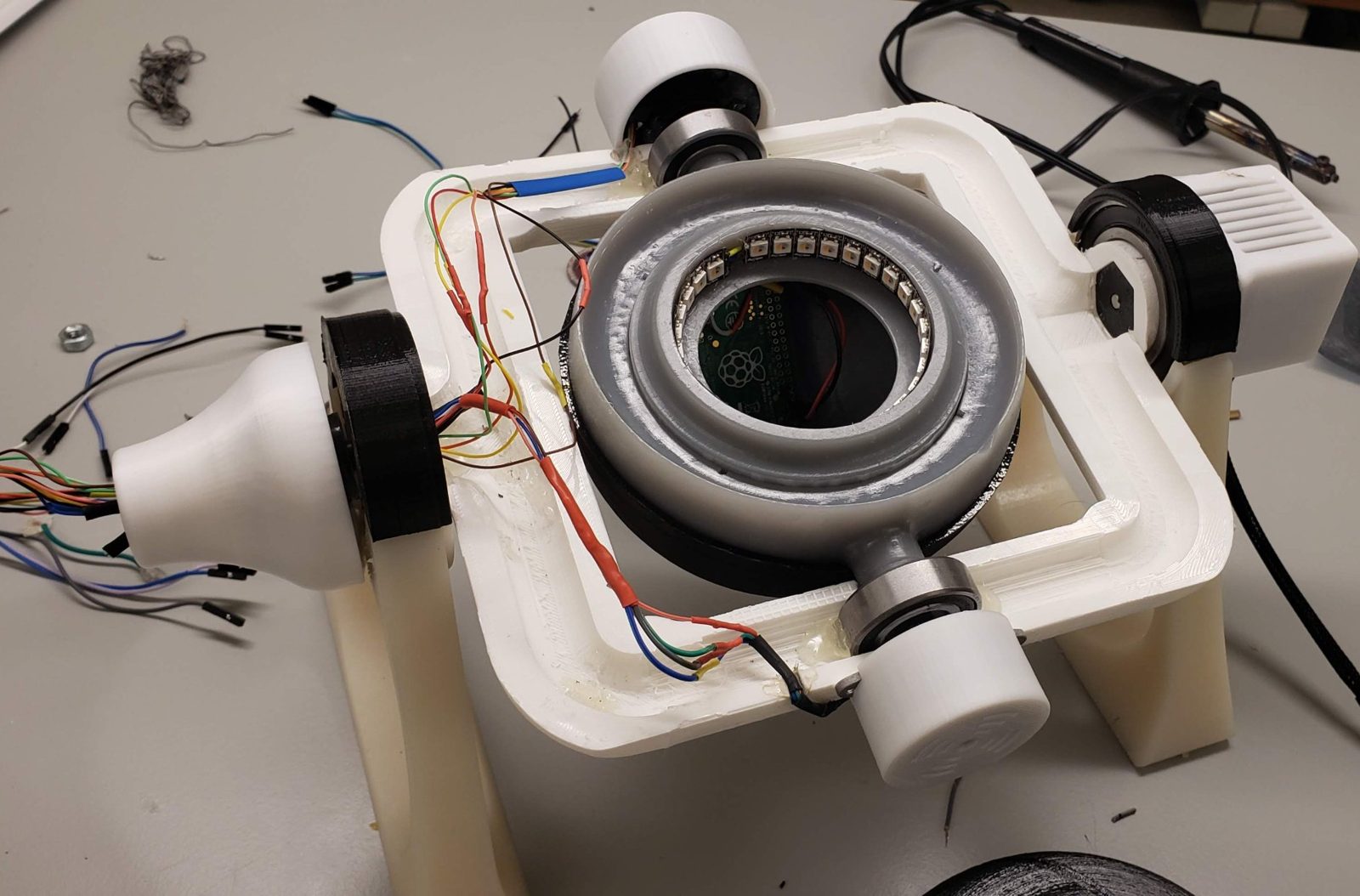
This is the second prototype, photographed in October 2018 while it was being wired. It was built for the Gilroy lab in the Department of Botany at the University of Wisconsin–Madison, which used it before the company was founded.
Most of what distinguishes the SciSpinner Max from a plain clinostat appears here for the first time. The sample sits in a sealed spherical chamber instead of an open ring. A Raspberry Pi Zero and camera sit inside the chamber, looking at the sample through an aperture surrounded by a ring of addressable LEDs, so the imaging and lighting rotate with the sample.
Each axis has its own motor and bearings, built into a square frame on two uprights. The three buttons are gone: the instrument is controlled from a touchscreen on a Raspberry Pi, mounted in a printed bezel and, at the time, sitting on a cardboard box.
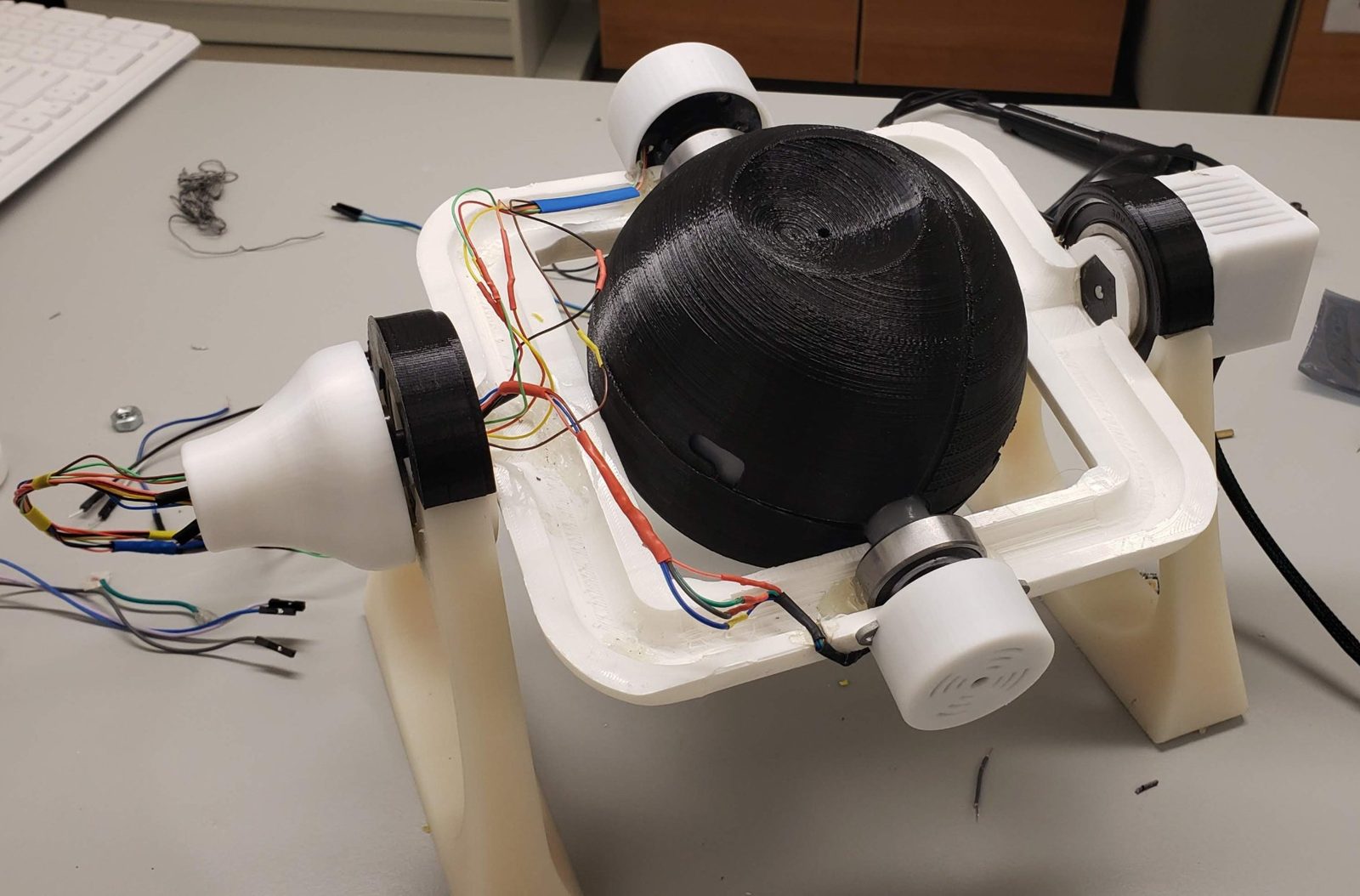
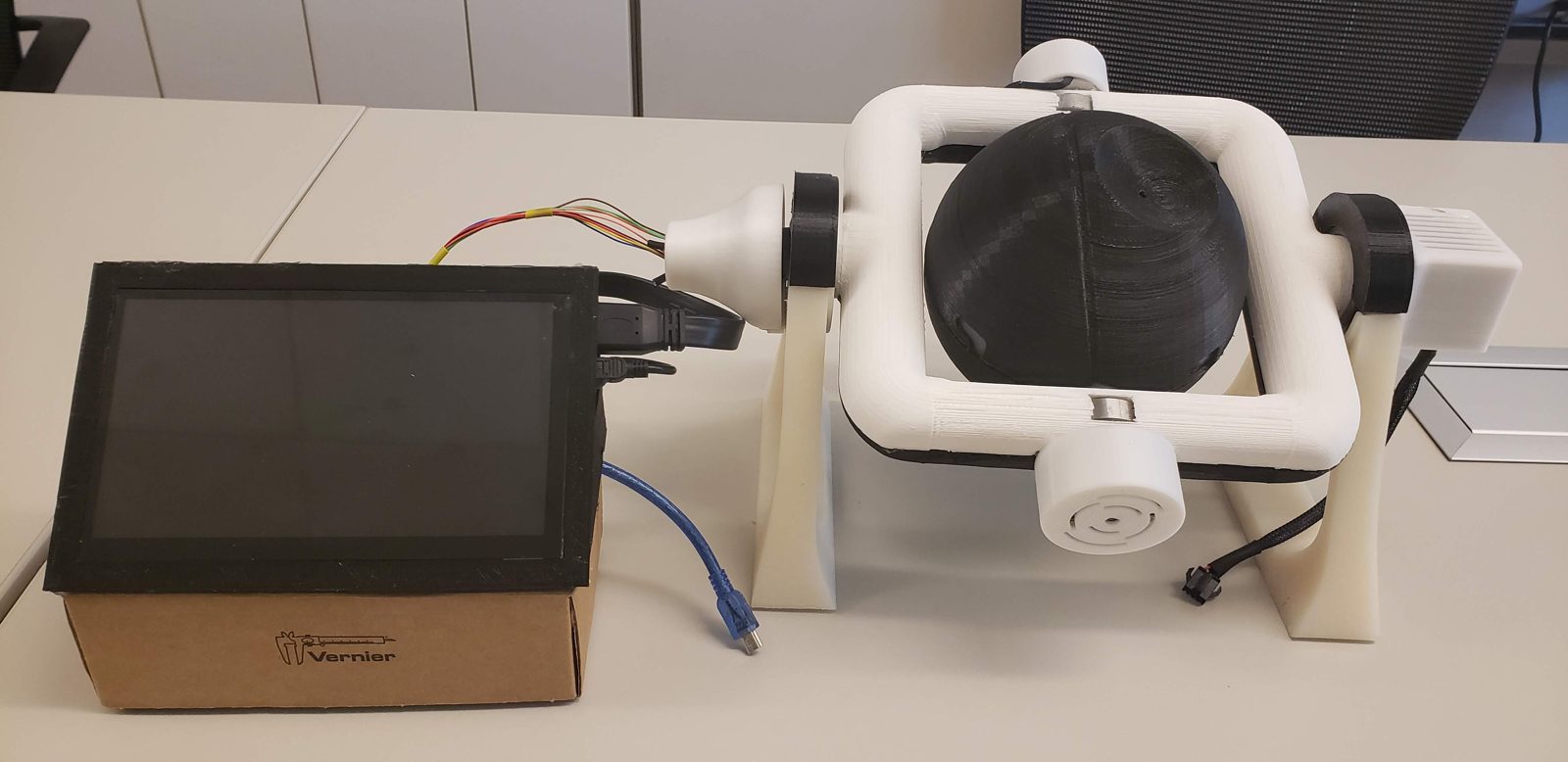
The individual parts have been redesigned several times since, but the arrangement has not. A SciSpinner Max is still a frame, a core with the camera and lighting inside it, and a Control Module outside the incubator.